
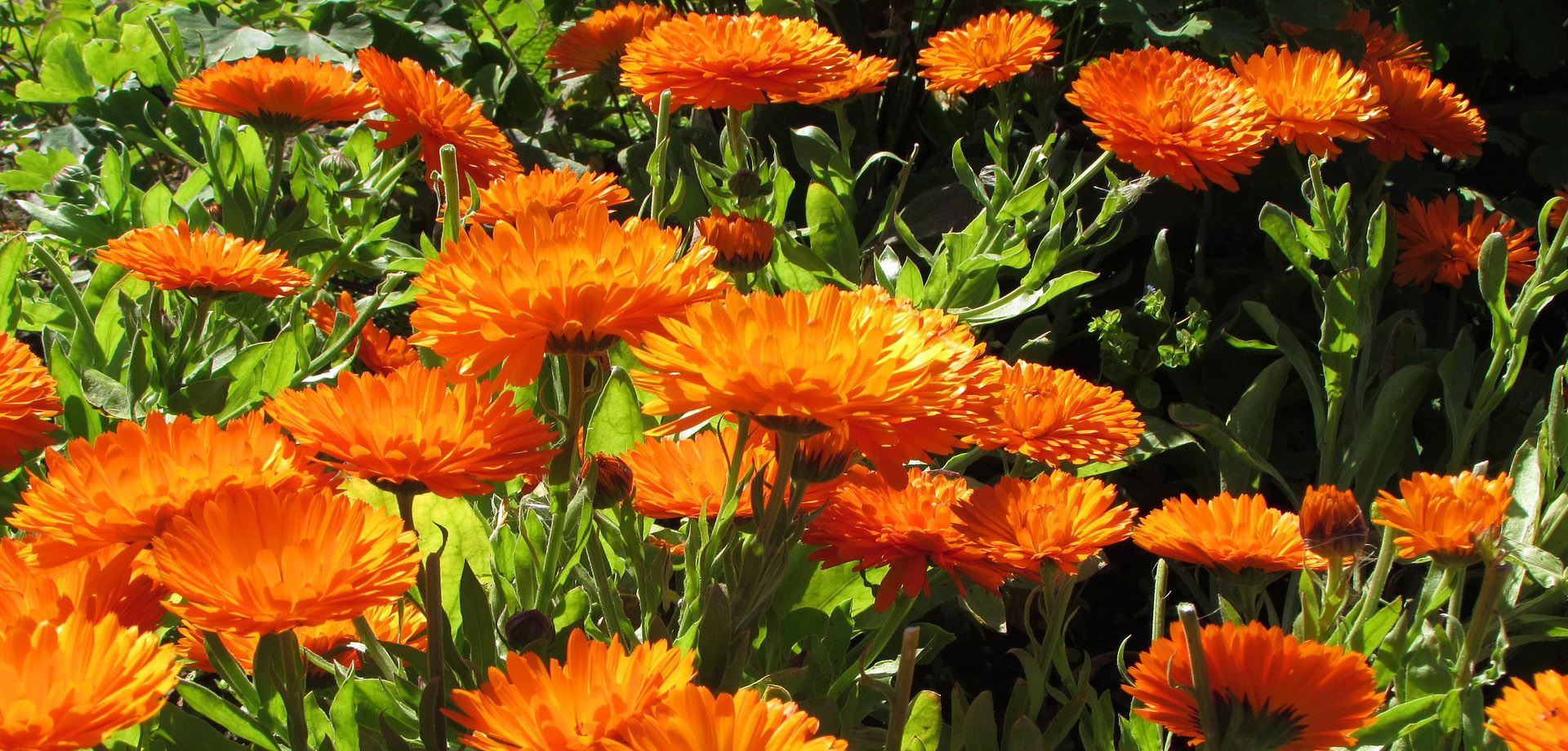
Calendula, also known as pot marigold, is a cheerful golden-orange flower that’s as healing as it is beautiful.
Calendula is native to southern Europe and parts of the Mediterranean, where it has been cultivated for centuries for both ornamental and medicinal purposes. Its name is derived from the Latin calendae, meaning “little calendar,” because it blooms almost year-round in mild climates. Revered in ancient cultures for its ability to heal wounds and soothe the skin, calendula remains a beloved herb in modern herbalism and skincare.
In the culinary world, calendula petals are sometimes referred to as “poor man’s saffron” due to their vibrant color and subtle peppery flavor. The petals can be sprinkled over salads, stirred into soups, or used to color rice dishes. While it’s not a culinary staple, its edible petals and gentle flavor make it a fun and functional addition to herbal recipes.
Medicinally, calendula is amazing for skin health. It’s widely used in salves, balms, and creams to treat cuts, burns, rashes, and insect bites. Its anti-inflammatory, antimicrobial, and antifungal properties make it ideal for soothing irritated or damaged skin. Calendula is also known to promote collagen production and accelerate wound healing, making it a favorite in natural skincare products for sensitive or acne-prone skin.
Internally, calendula supports the lymphatic system and digestive health. It’s often used in teas or tinctures to reduce inflammation in the gut, ease menstrual cramps, and support liver detoxification. Some herbalists also use calendula to help fight infections and boost the immune system, thanks to its antimicrobial and antioxidant compounds. It’s gentle enough for children and pets, yet powerful enough to be a staple in any herbal medicine cabinet.
Calendula’s versatility and gentle nature make it a must-have herb for anyone interested in natural wellness. Whether you’re sipping it in a calming tea or applying it to a sunburn, calendula offers a soothing touch backed by centuries of traditional use and modern research. Plus, it’s easy to grow in any garden, making it a beautiful and beneficial addition to your herbal toolkit.
Calendula Stats
Beneficial Compounds
| Compound | Benefit (internal) | Benefit (external) | Solubility |
|---|---|---|---|
| Triterpenoids |
Anti-inflammatory, supports liver function
|
Reduces inflammation, promotes wound healing
|
Oil-soluble
|
|
Carotenoids
|
Antioxidant, supports eye and skin health
|
Enhances skin tone, protects against UV damage
|
Oil-soluble
|
|
Saponins
|
Antimicrobial, supports digestion and immune function
|
Cleansing, antimicrobial, helps with acne
|
Water-soluble
|
| Essential Oils | Antimicrobial, calming (aromatherapy) | Antiseptic, soothing to irritated skin | Oil-soluble |
| Polysaccharides | Immune-modulating, supports gut health | Hydrating, supports skin barrier function | Water-soluble |
| Flavonoids | Antioxidant, supports immune function | Protects skin from oxidative stress | Water-soluble |
Key Benefits Summary:
- Anti-Inflammatory – Calms redness, acne, and conditions like rosacea.
- Antimicrobial – Fights fungal infections (e.g., dandruff, ringworm).
- Healing – supports the eyes, gut, liver, skin, and promotes wound healing.
- Supports Gut Health – supports digestions and gut health.
- Supports Skin Barrier – hydrates skin and supports the skin barrier.
Calendula Handicrafts
Please view our handicrafts with calendula.
No results found.

Leave a Reply
You must be logged in to post a comment.