
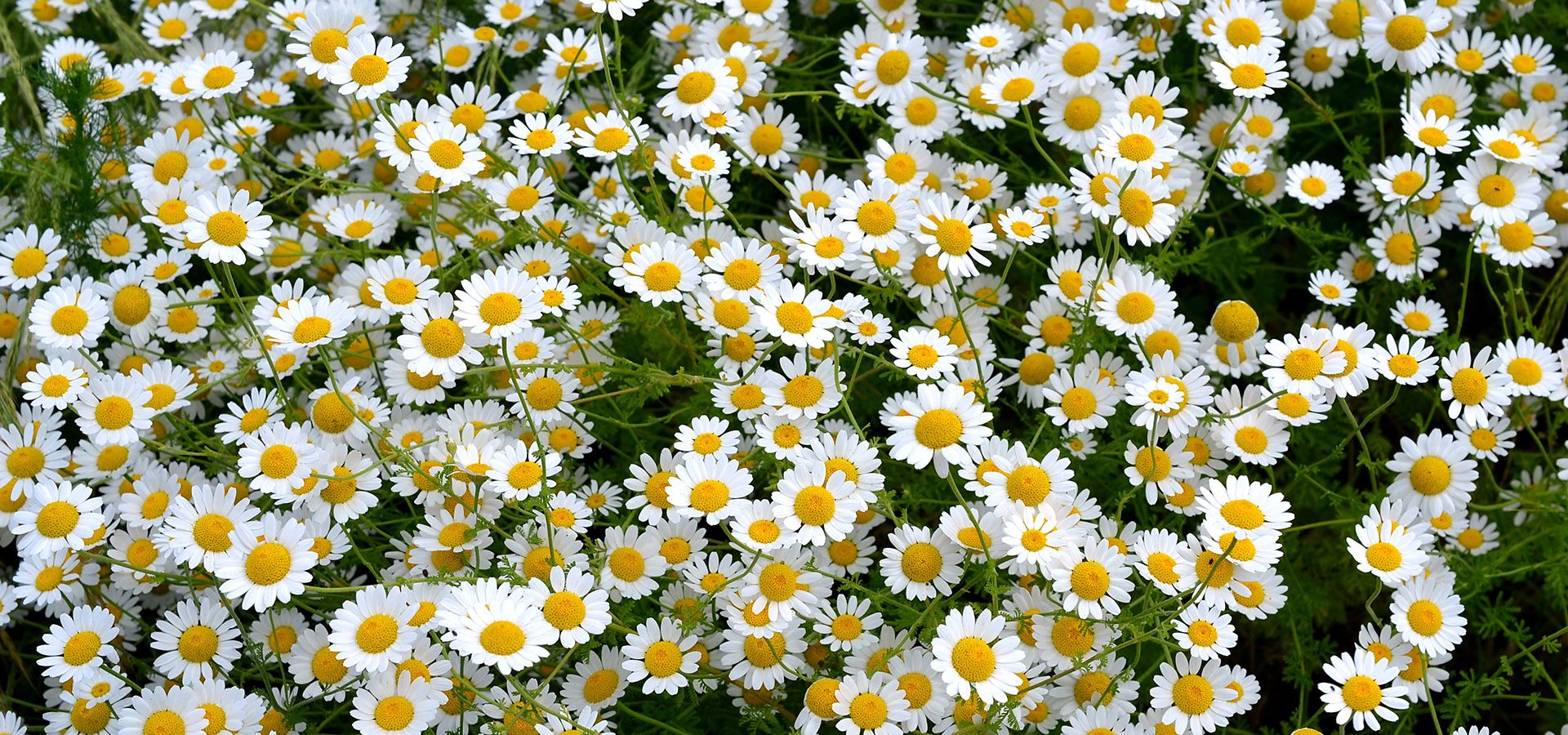
Chamomile is one of the most beloved herbs in the lands, with its daisy-like white and yellow flowers combined with its sweet, apple-like aroma.
Chamomile’s home is Europe and Western Asia, where it has been used for thousands of years by various cultures like the Egyptians, Greeks, and Romans for its calming and healing properties. In this age, it’s cultivated globally and is a staple in herbal medicine cabinets and tea collections alike.
Culinarily, chamomile is most famous for its use in soothing herbal teas. But its delicate floral flavor also makes it a surprising and delightful addition to syrups, baked goods, and even cocktails. Infusing cream or milk with chamomile can add a subtle, honeyed note to custards and ice creams. It pairs beautifully with citrus, honey, and vanilla, making it a versatile ingredient for both sweet and savory creations.
Medicinally, chamomile is a powerhouse of gentle healing. Internally, it’s best known for promoting relaxation and sleep, making it a gentle remedy for insomnia and anxiety. It also supports digestion, helping to relieve bloating, gas, and mild stomach cramps. Chamomile tea is often recommended for soothing menstrual discomfort and calming the nervous system during times of stress.
Topically, chamomile is a skin-soothing champion. Its anti-inflammatory and antimicrobial properties make it ideal for treating many minor skin conditions like minor wounds, rashes, eczema, and acne. It’s commonly found in creams, lotions, and even baby products due to its gentle nature. Chamomile can also help reduce redness and irritation, making it suitable for sensitive skin types. Its calming scent adds an extra layer of relaxation to skincare routines and bath soaks.
Whether you’re sipping it before bed or applying it to calm a skin flare-up, chamomile is a gentle yet effective herb that offers a wide range of benefits. Its versatility, safety, and sweet aroma make it a must-have in any herbalist’s toolkit or wellness routine.
Chamomile Stats
Beneficial Compounds
| Compound | Benefit (internal) | Benefit (external) | Solubility |
|---|---|---|---|
| Apigenin | Sedative, anti-anxiety, antioxidant | Anti-inflammatory, soothes irritated skin | Oil-soluble |
| Bisabolol | Anti-inflammatory, supports digestion | Antimicrobial, reduces redness and irritation | Oil-soluble |
| Chamazulene | Antioxidant, anti-inflammatory | Calms skin, reduces swelling and redness | Oil-soluble |
| Coumarin | Mild sedative, supports circulation | Fragrance component, anti-inflammatory | Oil-soluble |
| Flavonoids | Antioxidant, supports immune health | Protects skin from oxidative stress | Water-soluble |
| Tannins | Astringent, supports gut health | Tightens skin, reduces inflammation | Water-soluble |
Key Benefits Summary:
- Anti-Inflammatory – Calms redness, acne, and conditions like rosacea.
- Antimicrobial – Fights fungal infections (e.g., dandruff, ringworm).
- Calming – supports relaxation and sleep.
- Digestive Support – supports a healthy gut.
Chamomile Handicrafts
Please view our handicrafts that include chamomile.
No results found.

Leave a Reply
You must be logged in to post a comment.